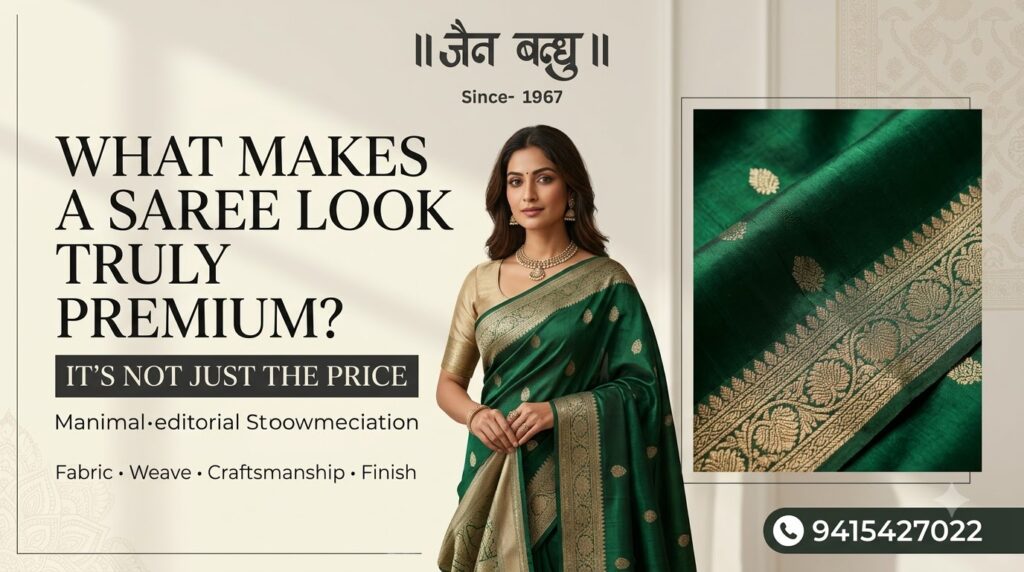
The Real Difference Between an Expensive Saree and a Premium One
Walk into any saree store and you’ll notice something curious: two sarees priced almost identically can feel worlds apart the moment you touch them. One drapes like water, holds its pleats without fuss, and looks richer in photographs than it does on the hanger. The other, despite a similar price tag, feels stiff, loses shape after a single wash, and photographs flat under lights. The gap between the two isn’t marketing — it’s craftsmanship, fibre quality, and finishing work that most buyers are never taught to look for.
This is the question worth asking before every purchase: is the price paying for genuine work, or for a brand name printed on the box? Understanding the answer changes how you shop, especially in a city like Lucknow where saree culture runs deep and choices range from mass-produced prints to hand-finished heirloom pieces.
Why Weave Quality Matters More Than the Price Tag
A saree’s weave is its skeleton. Everything else — colour, embroidery, embellishment — sits on top of it. A tightly woven, evenly tensioned fabric will always outperform a loosely woven one dressed up with heavy work, because the weave determines drape, durability, and how the fabric ages over years of wear.
Handloom vs Power Loom — What Buyers Should Know
Handloom sarees are woven on manual looms, often by artisans who have inherited the skill across generations. The process is slower, which is why handloom pieces cost more, but the fabric carries subtle irregularities — a slightly uneven thread here, a natural variation in the border there — that machines cannot replicate. Power loom sarees, by contrast, are produced faster and more uniformly, which suits everyday wear and budget-conscious buyers but rarely delivers the same depth of texture.
Neither is inherently “better” for every occasion. A power loom cotton saree is perfectly sensible for daily office wear, while a handloom silk piece earns its price for a wedding or festive event. The mistake buyers make is assuming price alone signals which category they’re getting.
Reading a Saree Like a Craftsman Does
Before you decide, run a few quick checks that experienced buyers and shopkeepers use.
Border, Pallu and Body Consistency
Hold the saree up to natural light. The border, body, and pallu should feel like they belong to the same fabric family — consistent thickness, matching sheen, and threads that don’t fray at the edges when gently tugged. On genuinely premium pieces, the reverse side of the pallu often shows as much detail and neatness as the front, a sign that the weaving or embroidery wasn’t rushed.
Zari work is another giveaway. Real zari (using silver or gold-coated thread) has a slightly muted, warm shine and doesn’t flake. Synthetic zari looks brighter initially but tends to dull and shed within a few washes.
Where Lucknow Fits Into the Saree Landscape
Lucknow’s textile identity is inseparable from Chikankari embroidery, a craft that originated in the region and remains one of India’s most recognised hand-embroidery traditions. According to industry estimates circulated by trade bodies, Uttar Pradesh’s handicraft and textile clusters — Chikankari included — support the livelihoods of lakhs of artisans and contribute meaningfully to the state’s export economy. This isn’t a small cottage industry; it’s a structured supply chain running from artisan clusters to retail counters across the city.
The Wholesale Saree Market in Lucknow
For buyers who shop in bulk — boutique owners, resellers, or families buying for large weddings — the wholesale saree market in Lucknow offers a different value proposition than retail counters. Bulk sourcing typically brings the per-piece cost down, but it also demands more scrutiny, since quality can vary significantly between wholesale lots. Anyone sourcing from this market benefits from either firsthand fabric knowledge or a trusted showroom that inspects stock before it reaches the shelf.
What to Look For When Comparing Saree Shops
Not every saree shop in the city operates the same way, and the differences show up in three places: transparency, sourcing, and after-sale support.
Best Saree Shop In Lucknow — What Separates the Good From the Average
A genuinely dependable best saree shop in Lucknow will usually offer three things without being asked: clear pricing (so you know exactly what you’re paying for fabric versus work), honest information about whether a piece is handloom, power loom, or blended, and staff who can explain care instructions rather than just closing the sale. Shops that hesitate to answer basic fabric questions are usually worth a second look elsewhere.
Buyers comparing options often search for a Lucknow saree shop with price listed upfront, simply because it saves the back-and-forth of in-store bargaining and sets realistic expectations before a visit. Showrooms that publish indicative pricing tend to build more repeat customers over time, since trust compounds faster than any single sale.
A Local Example Worth Noting
Daliganj Bazar has quietly become one of Lucknow’s dependable pockets for saree shopping, sitting slightly outside the more tourist-heavy markets but well within reach for local families. Jain Bandhu Saree Showroom, located in Daliganj Bazar, Lucknow, is one of the establishments in this stretch that focuses on the fundamentals covered above — fabric transparency and a working knowledge of what separates handloom from machine-made pieces.
The city’s saree retail landscape also includes larger national names such as Taneira and established regional players like Rama, both of which cater to buyers looking for branded consistency. These chains bring their own strengths — standardised sizing, wide catalogues, and recognisable quality control. Independent and neighbourhood showrooms, meanwhile, often compete on personalised service, flexible pricing conversations, and a closer relationship with local weaving and embroidery clusters. Knowing both options exist helps buyers choose based on what actually matters to them, rather than brand visibility alone.
Frequently Asked Questions
How can I tell if a saree is handloom or power loom before buying?
Check the reverse side of the border and pallu — handloom pieces usually show slight thread irregularities and a matte-to-soft sheen, while power loom fabric looks more uniform and glossy throughout. Asking the shop directly for a fabric composition tag is also a reliable step, and any credible best saree showroom in Lucknow should answer this without hesitation.
Is a higher price always a guarantee of better quality?
Not necessarily. Price can reflect brand overhead, embellishment cost, or marketing rather than fabric quality alone. Comparing a few sarees at similar price points, ideally at a best saree shop in Lucknow with price transparency, gives a much clearer picture than judging on cost alone.
What should I check specifically when buying a bridal saree?
For bridal wear, check zari authenticity, embroidery density on both sides of the fabric, and how the pleats fall when the saree is draped rather than just laid flat. Visiting a best bridal saree shop in Lucknow for wedding shopping in person, rather than relying only on photos, makes a noticeable difference in avoiding surprises on the big day.
If you’re exploring options among the best saree shops in Lucknow, it’s worth visiting a few showrooms in person before deciding — comparing fabric, finishing, and pricing side by side tells you more in ten minutes than any online description can. If you’re searching for a best bridal saree shop in Lucknow near me, Jain Bandhu Saree Showroom in Daliganj Bazar is one of the local options worth including on that list, particularly for buyers who value straightforward conversations about fabric and price.