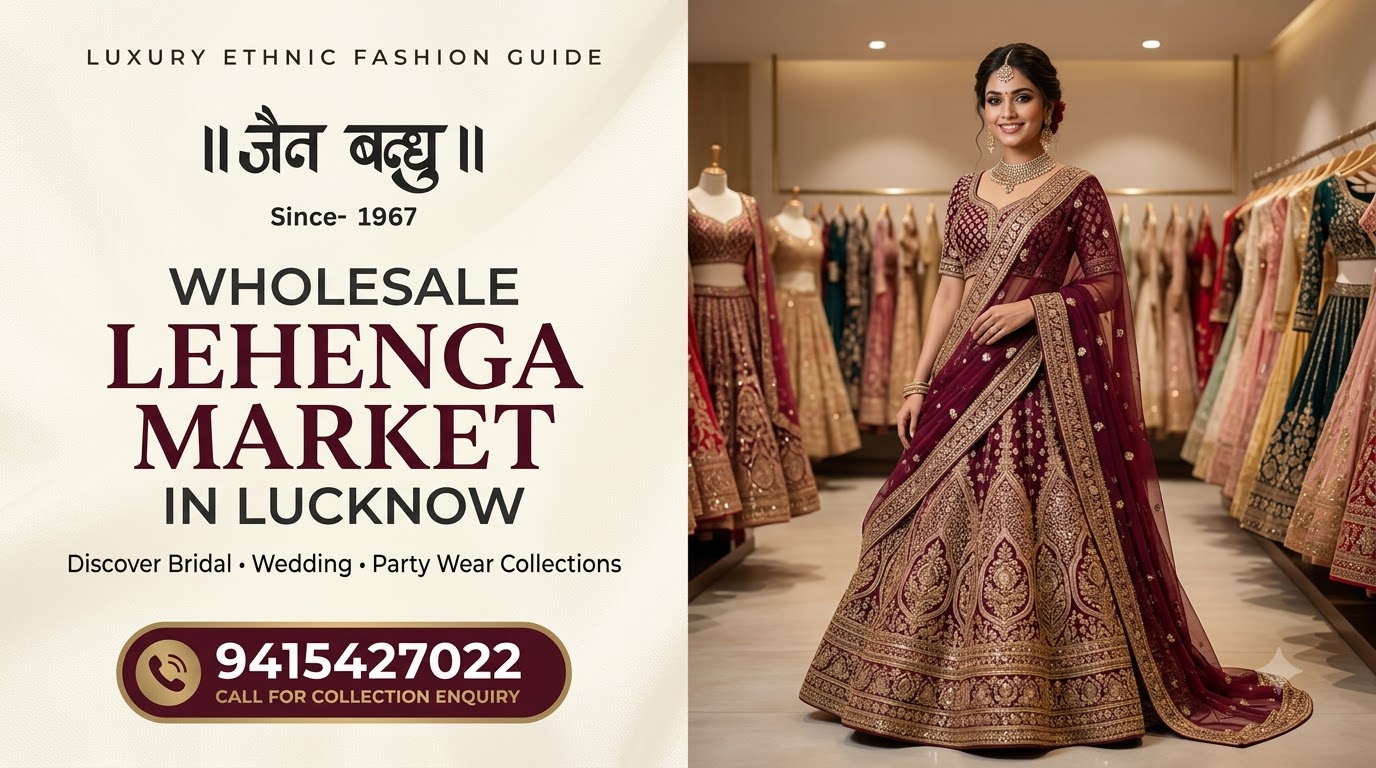
Behind every finished bridal lehenga lies a supply chain that most buyers never see — fabric sourcing, embroidery scheduling, and inventory planning that all happen months before wedding season actually begins. Understanding this supply chain offers useful context for anyone researching the wholesale lehenga market in Lucknow, particularly when it comes to timing your own purchase effectively.
How Fabric Sourcing Begins
Much of the raw silk and other premium fabric used in Lucknow’s bridal wear trade is sourced from weaving clusters in Varanasi, a relatively short distance away, giving local traders a logistical advantage in both cost and turnaround time compared to sourcing from further afield. This proximity is part of why the wholesale lehenga market in Lucknow with price structure can remain competitive even as raw material costs fluctuate seasonally.
The Pre-Season Planning Window
Well before wedding season begins, typically starting around June or July for the October-February peak, wholesale traders and embroidery workshops begin planning inventory based on anticipated demand, drawing on patterns from previous years and early bulk orders from retailers.
This pre-season window is when much of the actual embroidery work happens, since heavily worked pieces can take several weeks to complete, and workshops need adequate lead time to manage the volume expected once wedding season demand peaks.
Why Timing Matters for Buyers
Buyers researching a Lucknow lehenga shop with price range often don’t realize that shopping earlier in this supply chain cycle — before peak season fully kicks in — can mean access to better craftsmanship attention and more workshop flexibility, since embroidery teams aren’t yet managing the volume pressure of the busiest months.
How Retail Showrooms Manage Inventory
Retail showrooms typically place their own advance orders with wholesale traders and workshops during this pre-season window, building up finished inventory ahead of peak demand. Jain Bandhu Saree Showroom in Lucknow, located at Daliganj Bazar, follows this general pattern common to established local retailers, stocking bridal and ethnic wear ahead of the wedding season rush to ensure customers have access to a fuller range of finished pieces when demand is highest.
How National Chains Manage Seasonal Supply
Chains like Taneira and regional retailers such as Rama typically manage seasonal inventory through more centralized planning processes, often placing bulk orders further in advance across their broader store network. This centralized approach offers consistency but can mean less flexibility to respond to hyper-local trend shifts compared to Lucknow’s more workshop-connected wholesale and retail ecosystem.
The Impact of Peak Season on Pricing
As wedding season demand increases, pricing across most best lehenga shops in Lucknow, wholesale and retail alike, tends to firm up due to workshop capacity constraints. Buyers researching a best bridal lehenga shop in Lucknow with price commitment locked in early, before this seasonal pricing pressure builds, often find more room for negotiation and better value.
What Happens During Peak Season
Once peak season arrives, the supply chain shifts from planning and pre-production to fulfillment and finishing. Workshops that pre-planned their inventory generally handle this period more smoothly, while last-minute orders can face longer turnaround times simply due to volume.
This is part of why buyers searching for a best bridal lehenga shop in Lucknow for wedding day wear close to their wedding date are often steered toward ready-made or lightly customized pieces rather than fully custom orders, since the supply chain’s capacity for new, from-scratch work is more constrained during this window.
Off-Season Advantages for Buyers
Shopping during the off-season, roughly March through September outside the smaller secondary wedding windows, often means:
- More attentive service from workshops not yet managing peak volume.
- Potentially better negotiation room within the wholesale segment.
- Wider selection, since inventory hasn’t yet been picked over by peak-season demand.
A Practical Timeline for Buyers
- 6+ months before your wedding: Ideal window to place custom orders, taking advantage of workshops’ fuller availability.
- 3-5 months before: Still a reasonable window for moderate customization, though options may be more limited than earlier in the cycle.
- Under 2 months before: Best suited to ready-made or lightly altered pieces, given supply chain constraints during peak season.
Whether your search began with a broad best lehenga shop in Lucknow query or a more specific best lehenga shop in Lucknow with price comparison, aligning your shopping timeline with this supply chain rhythm generally leads to better outcomes than shopping reactively closer to your wedding date, particularly if you’re specifically hunting for a best bridal lehenga shop in Lucknow near me under time pressure.
Searching Locally With Timing in Mind
Buyers searching “lehenga shop near me” should factor this seasonal supply chain into their timeline expectations, recognizing that even a well-regarded best lehenga showroom in Lucknow faces genuine capacity constraints during the busiest months of the wedding calendar.
How Weather and Regional Festivals Influence the Calendar
Beyond the core wedding calendar, regional festivals and weather patterns also subtly influence the supply chain’s rhythm. Auspicious dates tied to the Hindu calendar can create short, intense demand spikes even outside the main October-February window, while Lucknow’s hot summer months naturally see workshops slow down slightly, both due to lower demand and the practical challenges of intricate handwork during peak heat. Traders experienced in this rhythm plan their embroidery scheduling around these patterns, which is part of why timing your own purchase around these known cycles can work in your favor.
How Transportation and Logistics Factor In
Fabric sourced from outside Lucknow, particularly from Varanasi’s weaving clusters, depends on reliable transportation logistics that can occasionally face delays during monsoon season or periods of regional disruption. Established traders typically build buffer time into their planning to account for this, but buyers placing custom orders during less predictable periods of the year should factor in a small additional cushion when confirming delivery timelines.
Frequently Asked Questions
When does Lucknow’s wholesale lehenga trade start preparing for wedding season?
Much of the pre-season planning and embroidery work begins around June or July, well ahead of the October-February peak wedding season, allowing workshops adequate time to complete heavily worked pieces.Does shopping earlier in the season guarantee better pricing?
Not always guaranteed, but shopping before peak season demand fully kicks in generally means more room for negotiation and better workshop attention, compared to shopping during the busiest months.Does Jain Bandhu Saree Showroom stock up ahead of wedding season?
As a retail showroom located at Daliganj Bazar, Lucknow, it generally follows the common industry pattern of building inventory ahead of peak wedding season demand, though specific stock timing is best confirmed directly with the showroom.